
If you own a home in Adelanto, your roof is not just your roof. In many of the city's planned communities and tract neighborhoods, the condition and appearance of your roof is something your HOA may keep an eye on, and your homeowners insurance carrier almost certainly cares about. Understanding what both parties look for — and having independent documentation that your roof is sound — can save you from surprise repair demands, coverage questions, and headaches at renewal time.
What Adelanto HOAs Typically Look At
Homeowners associations in Adelanto generally focus on two things: the condition of the roof as seen from the street, and whether the roof looks maintained. In the high desert, composition shingles can fade and curl under years of intense sun, and tile roofs can develop chipped or slipped tiles after wind events. An HOA that maintains community standards may send a notice when a roof looks weathered, stained, or damaged — even if the roof is still keeping water out.
What HOAs do not usually do is climb onto your roof and inspect its actual condition. Their concern is typically cosmetic. That is where documentation helps: if your HOA raises a concern about your roof's appearance, an independent roof certification report gives you a professional, documented assessment of the roof's real condition. In our experience, a certified inspection often resolves these conversations quickly, because it replaces a subjective complaint with facts about the roof's remaining service life, its drainage, and whether repairs are actually warranted.
It is worth noting that HOA rules vary from one community to another. Some are strict about roofing materials and color approvals; others focus only on visible damage. If you are planning any roof work in an HOA community, checking your community's architectural guidelines before signing a contract with a roofer is a smart first step.
What Insurers Want to Know About Your Roof
Insurance carriers look at roofs differently than HOAs do. Their question is risk: how likely is this roof to leak, and how much damage could a failure cause? As roofs age — especially composition shingle roofs that have spent years baking under high-desert sun — insurers often ask for more documentation. It is common for carriers to ask about roof age during underwriting or at renewal, and some request a roof inspection or certification before agreeing to full coverage terms.
The failure points that matter most to insurers on Adelanto roofs are the ones the desert creates. Years of UV exposure make asphalt shingles brittle, and brittle shingles lift more easily in wind — which Adelanto gets plenty of. Heat also ages the underlayment beneath the surface, particularly on older roofs installed before modern synthetic underlayments were common. On tile roofs, the tiles themselves often outlast the underlayment underneath, which can dry out and crack from heat exposure. Wind lift along hips, ridges, and eaves is another pattern our inspectors see regularly in high-desert cities.
A roof certification does not change the age of your roof, but it documents its current condition: that flashing is intact, drainage works, penetrations are sealed, and the roof is performing as intended. That documentation is exactly the kind of evidence underwriters appreciate when they are evaluating an older roof. We often hear from homeowners who needed proof of roof condition for their carrier — and a certification report is the simplest way to provide it.
How a Roof Certification Inspection Works
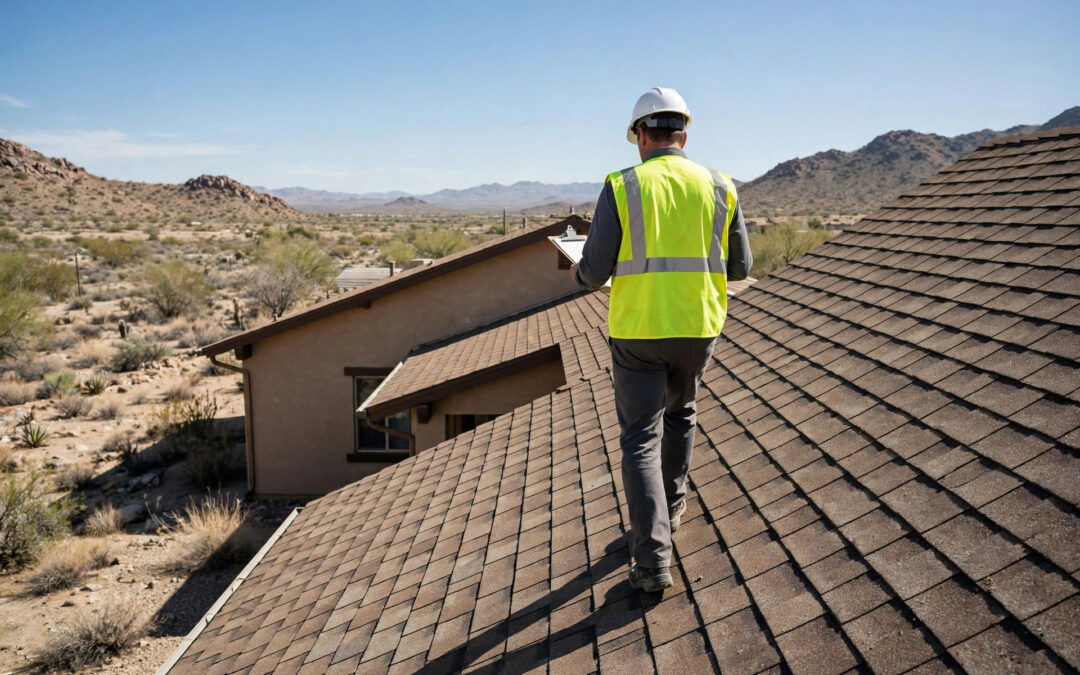
Our inspections follow the same professional protocol on every roof, adapted to what the desert does to roofing systems. On a typical Adelanto home, here is what our NRCIA-certified inspectors evaluate:
- Surface material condition — shingle granule loss, curling, brittleness, and wind damage on composition roofs; slipped, cracked, or broken tiles on tile roofs.
- Underlayment exposure and aging — particularly at valleys, transitions, and anywhere the desert sun has degraded the membrane.
- Flashing and penetrations — vents, skylights, chimneys, and pipes are common leak points, and heat cycling can break down the sealants around them.
- Drainage and ponding — even desert cities get sudden downpours; we check that water moves off the roof rather than sitting.
- Wind-related damage — lifted shingles, displaced ridge caps, and loose tiles that the next wind event could turn into a leak.
You receive a written report with our findings and photographs. If the roof meets our standards, we certify it — a certification that documents the roof's condition and expected remaining service life. If it does not, you get a clear list of what needs attention and why, so you can make informed decisions rather than guessing.
When to Get Certified
A few situations make certification especially worthwhile for Adelanto homeowners. If your HOA has flagged your roof, a certification gives you documented standing. If your insurer is asking questions about roof age or condition, certification gives you professional evidence. If you are buying or selling, certification removes roof condition from the list of deal-killers — buyers, lenders, and insurers all value a documented, professionally assessed roof. And if your roof is simply getting older, a certification gives you an honest picture of where it stands before a leak forces the issue.
For homeowners near Adelanto wondering what roof certification covers in this area, our Adelanto roof certification service page outlines how the inspection applies to local homes and what the certification includes.
Get Your Roof Certified
HOAs and insurers both care about your roof — for different reasons, but with the same practical result: you need to know your roof is sound, and you need to be able to prove it. That is exactly what we do. Get Your Roof Certified provides NRCIA-certified roof inspections and certifications throughout the high desert and Southern California. Call 310.880.9718 to schedule your inspection, and get the documentation your HOA, your insurer, and your peace of mind require.